📊 EBITDA is everywhere- investor decks, boardrooms, earnings calls.
But here’s the reality: it’s a shortcut metric, not the whole truth.
✔️ Why people love it → It removes financing, taxes and non-cash items. Easy to compare operations.
⚠️ Why it’s risky → It can overstate financial health if debt, tax or reinvestment needs are heavy.
At Trustlane Partners, we use EBITDA as a starting point, not the final destination.
💬 Because a filtered selfie may look good, but real decisions need the unfiltered picture.
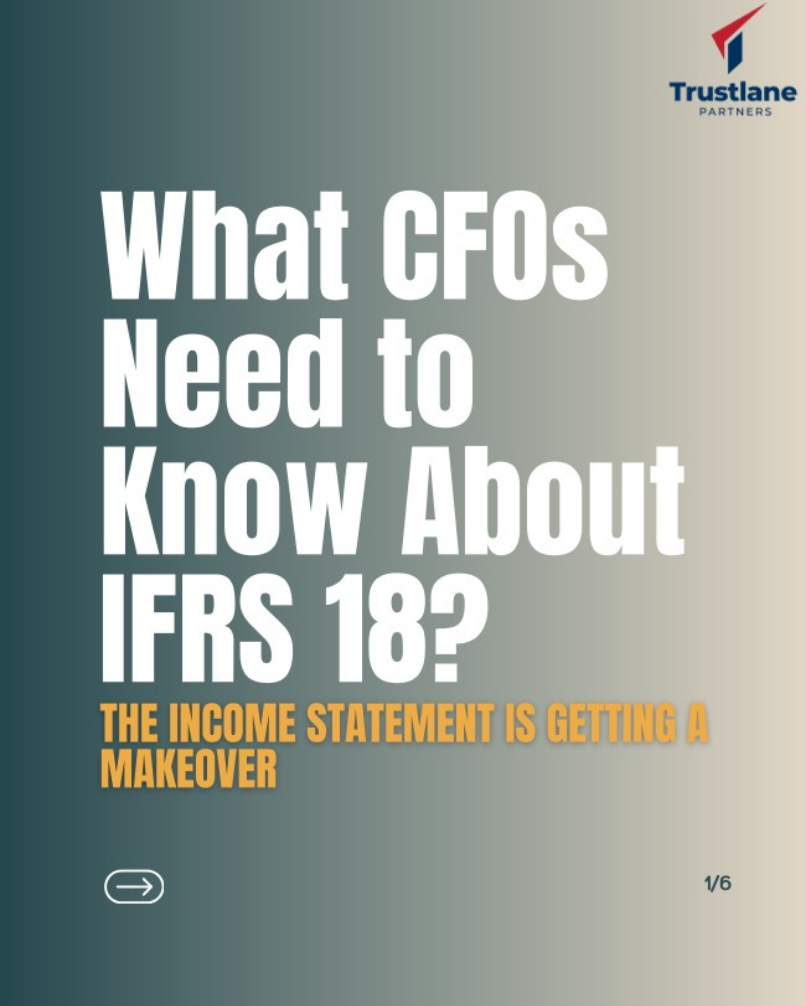
IFRS 18 is more than a technical update, it’s a strategic shift in how financial performance is communicated globally. Effective from January 1, 2027, this new standard replaces IAS 1 and introduces a more structured, transparent, and investor-friendly format for the income statement.
Here’s what’s changing and why it matters:
🔹 Three Defined Categories
Income and expenses must now be classified into Operating, Investing, and Financing activities. This brings consistency across industries and helps stakeholders better understand how a business generates value.
🔹 Mandatory Subtotals
For the first time, IFRS mandates subtotals like Operating Profit, making it easier to compare performance across companies, even those with different business models.
🔹 Management-Defined Performance Measures (MPMs)
Companies often use custom metrics to tell their story. Under IFRS 18, these MPMs must be disclosed, reconciled, and explained, bringing clarity to what was previously opaque.
🔹 Improved Transparency and Comparability
Investors and analysts will benefit from cleaner, more comparable statements. But for CFOs, this means rethinking how internal KPIs align with external reporting.
What Should CFOs Do Now?
✅ Start mapping your current income statement to the new format
✅ Review how your team defines “Operating Profit”
✅ Identify and document any custom performance measures
✅ Engage advisors to assess disclosure gaps and audit readiness
Global Relevance for Multinationals:
Whether you’re reporting in the UAE, UK, Australia, or Canada, IFRS 18 will impact how your financials are presented. For CFOs managing cross-border teams, consistency in reporting will be critical.
At Trustlane Partners, we help finance leaders turn regulatory change into strategic clarity. IFRS 18 isn’t just about compliance, it’s about telling your financial story with confidence.
Let’s make sure your numbers speak the language of trust.

The truth is, auditors aren’t scary.
What’s scary is being unprepared for them.
For many companies, audit season looks the same every year:
🔸 Teams scrambling to pull together missing documentation
🔸 Controls that exist on paper but don’t work in practice
🔸 Last-minute reconciliations that leave everyone stressed and drained
But here’s the good news: it doesn’t have to be this way.
That’s where audit outsourcing comes in. By working with the right partner, you can:
✔️ Get audit-ready schedules prepared well in advance
✔️ Build strong internal controls that hold up under scrutiny
✔️ Rely on a team that liaises with auditors directly, so you don’t have to
The result? A smoother audit process, fewer surprises, and more time for your team to focus on what actually drives growth, instead of running around in panic mode.
At the end of the day, audit outsourcing isn’t just about efficiency or saving time.
👉 It’s about reducing stress, increasing confidence, and protecting your sanity.
Outsourcing bookkeeping isn’t just cost-effective, it’s peace of mind.
Your books should tell a story – one of growth, control and opportunity. But too often, they’re a source of confusion. Our Bookkeeping Outsourcing service gives you:
📊 Accurate records
📅 Timely reconciliations
🔍 Real-time visibility into cash flow
We work behind the scenes so you can focus on the big picture. Whether you’re a start-up or a growing enterprise, we tailor our approach to fit your rhythm.
Skip the stress at month-end with this simple 5-step routine that ensures accuracy and provides strategic insights.
The 5 Steps:
Step 1: Record All Transactions
Capture every financial event: log all cash, bank, and invoice transactions promptly. Timely entry prevents errors and ensures your records are current.
Step 2: Perform Account Reconciliations
Match internal ledgers with external statements (bank, credit card). Reconciliation is key to compliance, helping quickly identify and correct discrepancies.
Step 3: Post Adjusting Journal Entries
Use accrual accounting: record non-cash entries like depreciation, accruals, and prepayments. Accurate adjustments align revenue and expenses with the correct period for better reporting.
Step 4: Review and Analyze Financial Data
Generate and review key reports (Balance Sheet, Income Statement). Variance analysis against budgets drives better decision-making and performance insights.
Step 5: Finalize Reports and Close the Period
Obtain management approval, finalize all reports, and lock the accounting period. A formal close provides reliable data for future planning and external audits.
We are a creative digital agency providing complete solutions for website design, development, and digital marketing. Our team focuses on delivering high-quality services that help your business stand out in today’s competitive digital world.