
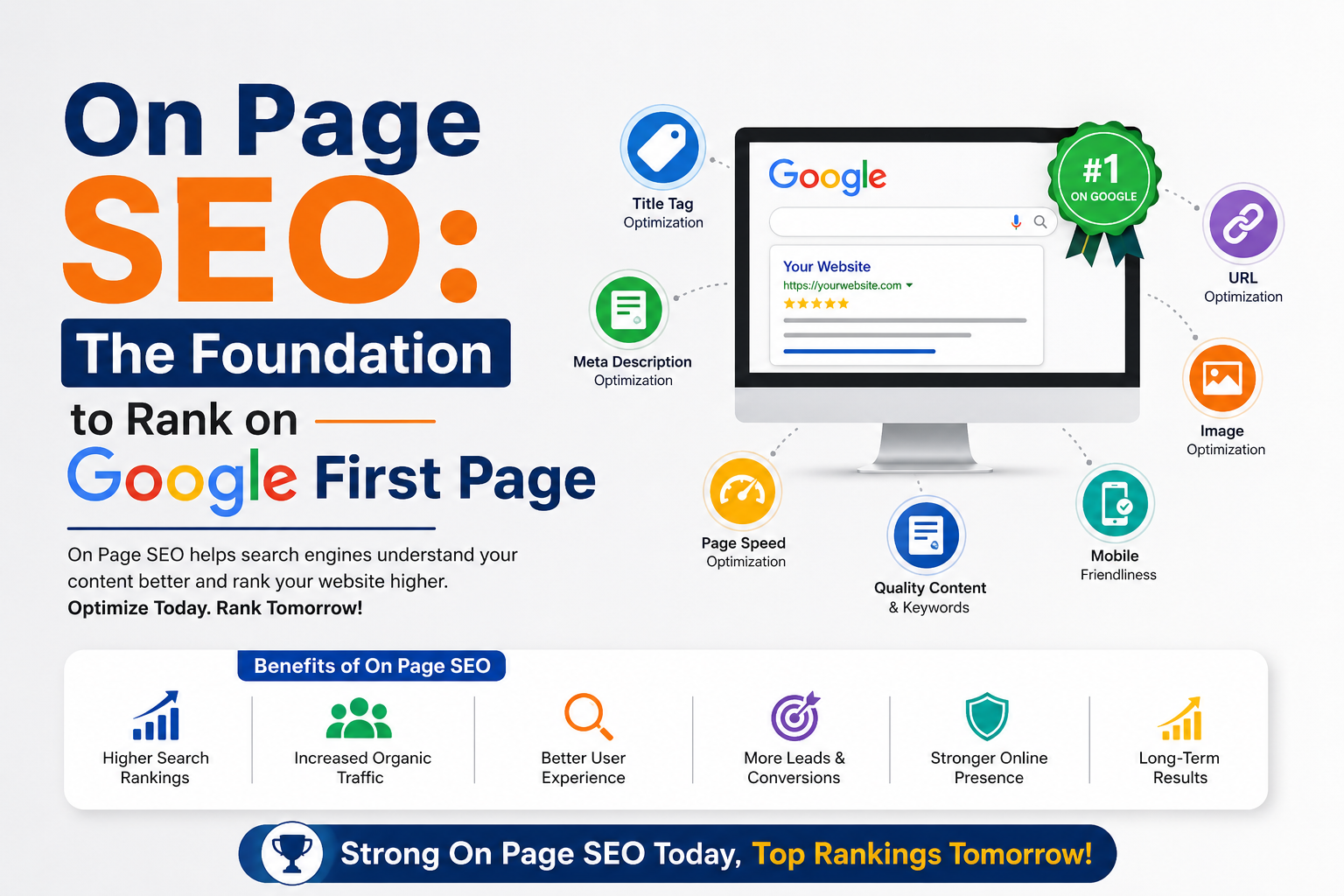
Are you struggling to get your website on Google’s first page despite creating quality content? The reason could be weak on-page SEO. In today’s competitive digital world, on-page SEO plays a major role in improving website visibility, increasing organic traffic, and helping businesses attract the right audience.
On-page SEO is the process of optimizing individual web pages so search engines can easily understand your content and rank it higher in search results. From proper keyword placement to content structure and page speed, every element matters when it comes to achieving better rankings on Google.
Why On-Page SEO Matters for Your Website
A well-optimized website not only helps search engines crawl your pages effectively but also improves user experience. When visitors find your content useful, easy to read, and fast-loading, they spend more time on your website — which positively impacts rankings.
Businesses investing in on-page SEO often experience:
- Higher Google rankings
- Better website traffic
- Improved user engagement
- More qualified leads
- Stronger online visibility
Without proper optimization, even the best websites may struggle to appear in search results.
Key Elements of Effective On-Page SEO
1. Keyword Optimization
Using relevant keywords naturally in titles, headings, meta descriptions, and content helps search engines understand your page topic. Avoid keyword stuffing and focus on user-friendly content.
2. SEO-Friendly Content
High-quality, informative, and engaging content is essential for ranking on Google. Content should solve users’ queries while maintaining readability and proper formatting.
3. Meta Titles & Descriptions
Optimized meta titles and descriptions improve click-through rates and help search engines display your pages correctly in search results.
4. Internal Linking
Internal links connect related pages on your website, helping users navigate easily while improving search engine crawling.
5. Mobile-Friendly Website
Since most users browse on mobile devices, responsive website design is now a major Google ranking factor.
6. Fast Page Speed
A slow website can increase bounce rates and reduce rankings. Optimizing images, reducing unnecessary scripts, and improving hosting can boost performance.
7. Proper Heading Structure
Using H1, H2, and H3 tags correctly makes content organized and easier for both users and search engines to understand.
How On-Page SEO Helps Businesses Grow
Strong on-page SEO creates a solid digital foundation for long-term growth. Whether you run a local business, e-commerce store, educational consultancy, or service-based company, proper optimization helps your website reach potential customers searching online.
Businesses that focus on SEO-friendly website structure and valuable content often gain a competitive advantage in their industry.
Final Thoughts
On-page SEO is not just about rankings — it’s about creating a better experience for users and search engines alike. A properly optimized website increases credibility, visibility, and opportunities for business growth.
If you want your website to rank on Google’s first page, investing in professional on-page SEO strategies can make a significant difference in your online success.